A Collision With Another Planet Could Have Allowed for Life on Earth
A Collision With Another Planet Could Have Allowed for Life on Earth
Scientists believe that a collision with another planet, known as Theia, could have played a crucial role in…
A Collision With Another Planet Could Have Allowed for Life on Earth
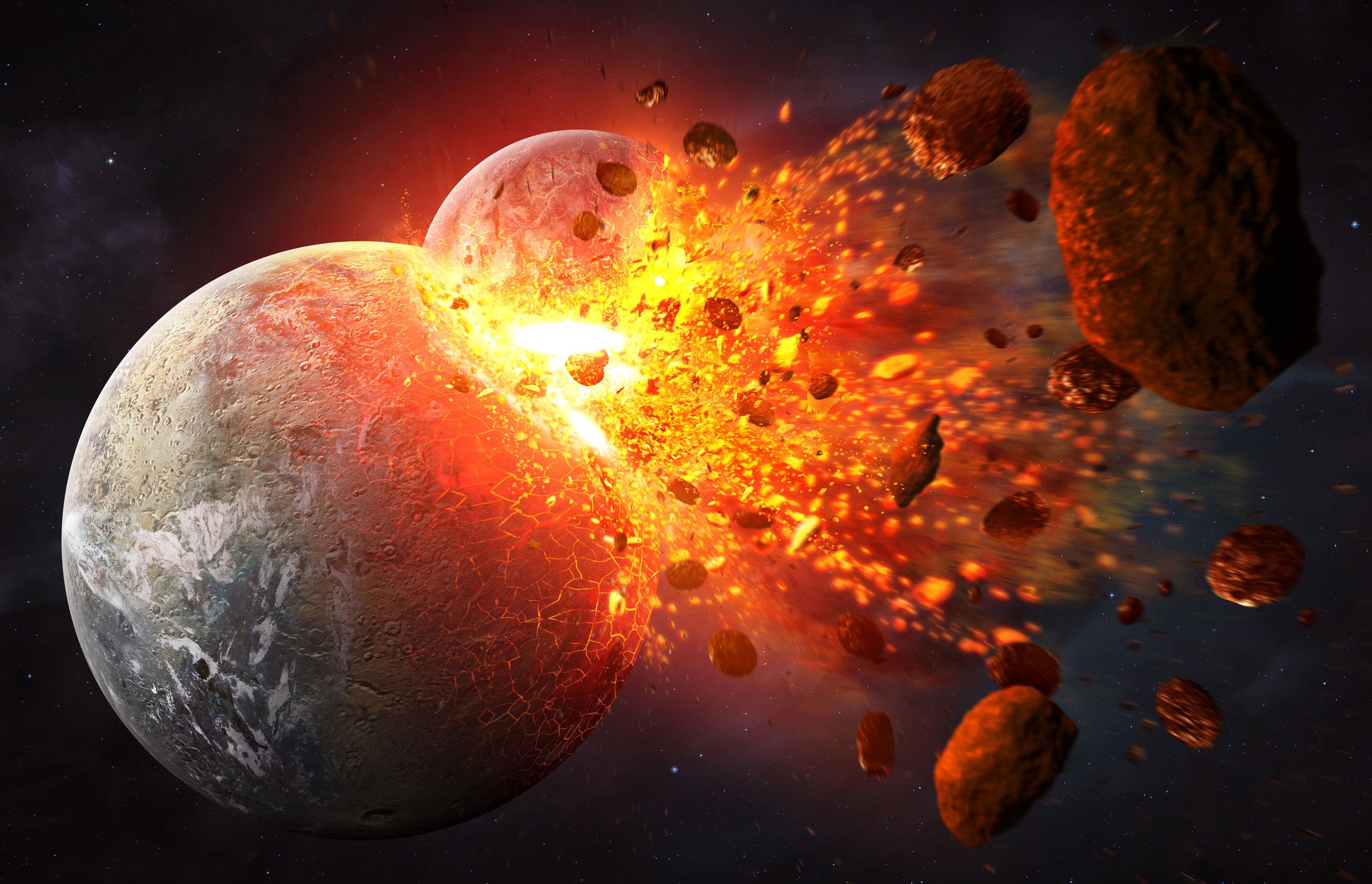
Scientists believe that a collision with another planet, known as Theia, could have played a crucial role in creating the conditions necessary for life to exist on Earth. This theory, known as the Giant Impact Hypothesis, suggests that a collision between Earth and Theia billions of years ago resulted in the formation of the moon and led to the creation of Earth’s unique atmosphere and composition.
The impact from the collision would have caused a significant amount of material to be ejected into space, eventually coalescing to form the moon. This event also released a vast amount of energy, which would have created intense heat and pressure on Earth, melting and vaporizing much of the planet’s surface.
As the Earth cooled and the debris from the collision settled, the planet underwent a process of differentiation, whereby heavier elements sank to the core while lighter elements rose to the surface. This process is believed to have helped create Earth’s diverse geology and mineral composition.
Furthermore, the collision is thought to have introduced water and other volatile elements to Earth, which ultimately led to the formation of oceans and a stable atmosphere. These conditions were essential for the development and sustenance of life on our planet.
While the Giant Impact Hypothesis is still a subject of debate among scientists, it offers a compelling explanation for the origins of our planet and the conditions that allowed life to thrive. By studying the materials found on the moon and Earth, researchers continue to uncover clues about our cosmic history and the events that shaped our world.
In conclusion, a collision with another planet could have been the catalyst for the creation of Earth’s moon, atmosphere, and geological features, ultimately paving the way for the development of life on our planet.


